SING THE PLANETS SONG
Planets Song
Read and write the missing words
Practice your pronunciation and intonation. Click to read the song.
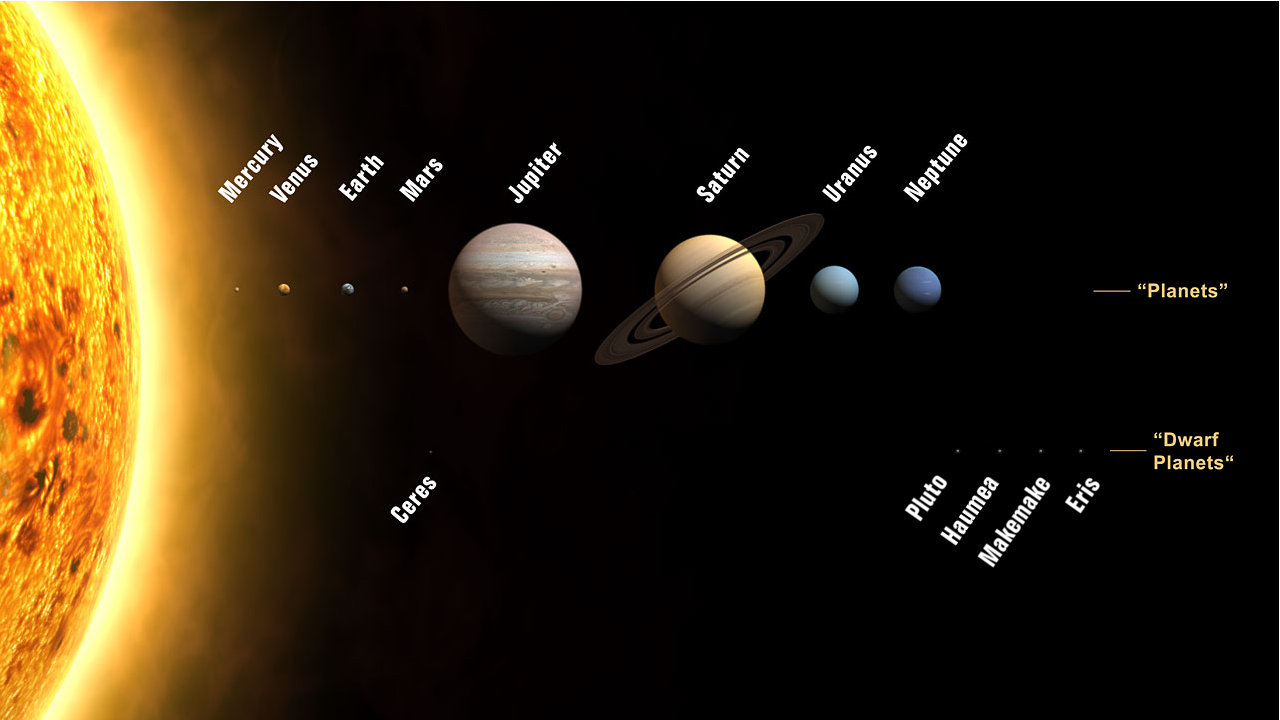
In ancient times people looked up at the sky. They saw twinkling bodies. Most of them were approximately in the same place. But some clearly moved around. They were not stars. They were planets.
Because these lights moved, people thought they were special. They wondered if these moving lights could be like gods. Gods were powerful beings who controlled things like the weather, the harvests, and even people's lives.
So, people decided to name the planets after these gods. For example:
Jupiter was named after the king of the gods. It's the biggest planet, so it made sense to name it after the most important god.
Mars was named after the god of war. It's a red planet, and red is the color of blood and war.
Venus was named after the goddess of love and beauty. It's the brightest planet in the sky, so it was seen as a beautiful thing.
Why did they think the planets were gods? Well, they didn't have telescopes or spaceships back then. They couldn't see very far into space. So, they used their imaginations to explain the things they saw.
Much later, William Herschel discovered Uranus in 1781, using a telescope. It was named after the Greek god of the sky. It was the first planet discovered with a telescope, and it was a big thing, so it was named after a powerful god.
Later, Neptune was discovered in 1846 by Johann Gottfried, based on mathematical predictions. It was named after the Roman god of the sea. Its deep blue color reminded people of the ocean.
Remember: Planets are not stars. They are big balls of rock, gas or ice that orbit the sun.
Licensed under the Creative Commons Attribution Non-commercial Share Alike License 4.0